Salt Air and Your Garage Door: A Coastal Bend Care Guide
Salt film, not salt chunks, does the damage - it settles invisibly and holds moisture against steel.
Read the Guide
Three tests, five minutes, monthly: sensor stop, contact reverse, balance.
Problem: Three tests, five minutes, monthly: sensor stop, contact reverse, balance.
Solution: A door that fails any of them is out of service until it is fixed - not 'used carefully'.
When to call: Children and pets are the reason these systems exist; the tests are how you know they still work.
A garage door is the heaviest moving object in a home, and it works over the busiest doorway in the house. Its safety systems - the photo-eye stop, the contact reverse and the spring balance that makes both possible - are not features to assume. They are systems to test. This guide gives the three monthly tests, what passing and failing look like, and the rules that follow a failure.
Corpus Christi's garage doors breathe Gulf air every day of the year. The sea breeze carries an invisible salt film miles inland, and it settles on springs, cables, rollers and tracks whether a home sits behind the dunes on Padre Island or out in Calallen - distance from the water sets the speed of the corrosion, never its direction. Steel that would serve a decade inland is read here on a shorter clock, and every honest service in this directory starts from that fact.
With the door closing, pass a cardboard box - never a hand, never a foot - through the beam at the door's foot. The door must stop and reverse. Then check the lenses: both sensor lights steady, lenses wiped. On this coast, filmed lenses are the leading cause of sensor misbehavior, and the wipe is part of the test. A door that closes through an interrupted beam has failed the test that matters most, and it is out of service - opener disconnected, door used by hand only if it is balanced - until it is repaired.
Lay a 2x4 flat on the floor in the door's path and close the door onto it. On contact, the door must reverse within moments. This test proves the force-sensing half of the safety system - the half that answers when something solid meets the door that the beam did not see. A door that presses and strains against the board has failed, and the same out-of-service rule applies: the force system is calibrated by professionals, not adjusted by guess at home.
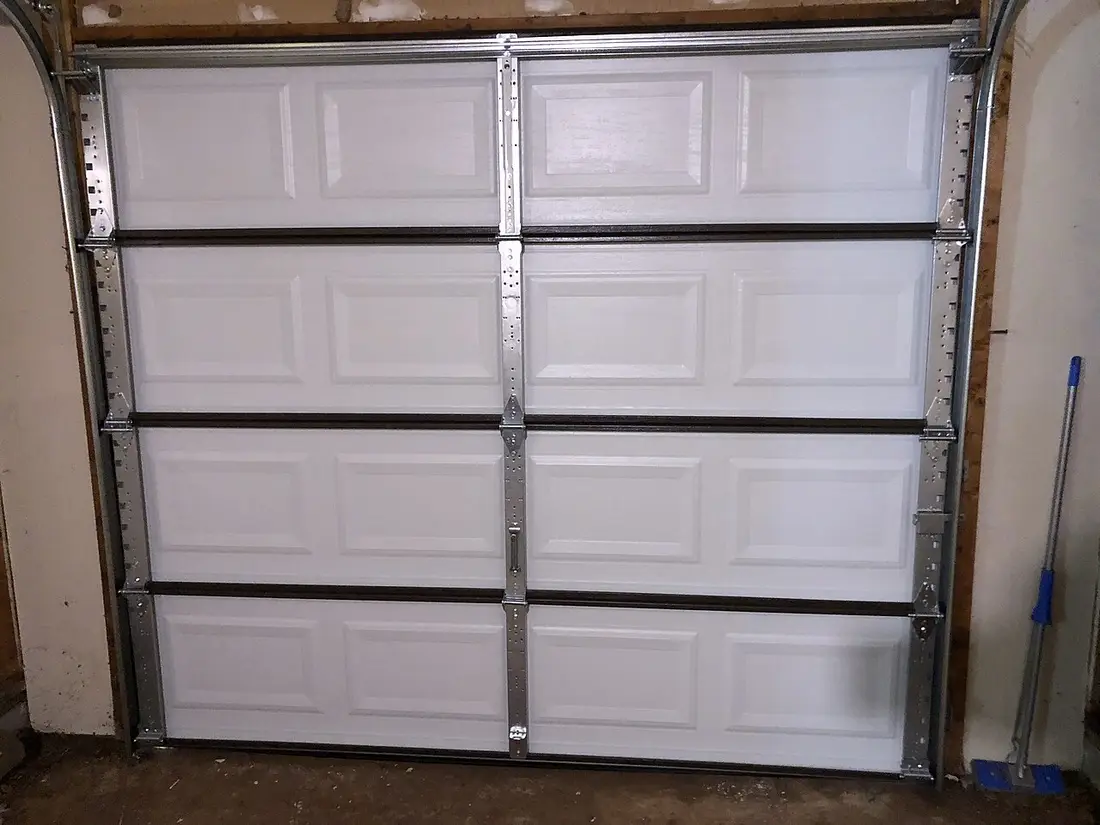
Disconnect the opener with the door closed and lift the door by hand to halfway. A balanced door stays near where it is left, drifting little. A door that slams down is spring-tired and dangerous - its weight is no longer counterweighted, and every other safety system is compensating. A door that flies up is over-sprung. Either failure is a service call, and a door that slams is not to be used at all: its springs are the story, and springs are professional ground.
The tests exist because the doorway is where children play and pets wander. Add three household rules to the monthly tests: the wall button is mounted where small children cannot reach it and within sight of the door; remotes are not toys and never live in small hands; and no one - of any age - walks under a moving door or races a closing one. The door's speed is not a game the household can win.
Openers from before the photo-eye era still run in older Corpus Christi homes, and they lack the first test entirely - there is nothing to check because the system is absent. That absence is the finding: such an opener is replaced, not maintained around. The same plain rule applies to any door whose safety faults keep returning: safety systems are not a subscription of repairs - at some point the honest answer is a modern system, stated plainly.
Families rehearse fire escapes and never rehearse the garage - yet the garage door is the heaviest moving object they own. Add one minute to the monthly tests: show every driver where the release cord is and when it must never be pulled (a crooked or spring-broken door), where the wall button is, and what a failed test means - the door waits, the call goes in. Knowledge placed before the emergency is the difference between a household that manages a failure and one that improvises under a hanging door.
A spring lets go overnight; the morning's first cycle is the one that fails; the car sits behind a door that weighs hundreds of pounds and an opener that cannot lift it. It happens across the Coastal Bend every week, and it is why emergency routing here starts with one question - is a vehicle trapped? - and why the trucks carry springs in the sizes this city's doors actually run.
That is the service side of this guide's subject. When you are ready, the Emergency Garage Door Repair page carries the process, the coverage by neighborhood and the number to call.
Box through the closing door's beam - it must stop and reverse.
Door closes onto a flat 2x4 - it must reverse on contact.
Disconnected at halfway, a balanced door stays. Slamming or flying both fail.
Lenses clean, lights steady, cables and springs eyeballed for rust and fraying.
Out of service means out of service - the call goes in the same day.
Put the tests on the calendar - monthly, same day as the smoke-alarm glance.
Keep the doorway's floor zone clear; the beam guards a path, keep it one.
Teach every household member the rules once, out loud, at the door.
Never bypass a sensor to make a door close - the fault is the message.
Keep the tests' results with the house paperwork - a dated line each month, and the service watch-lists between them. The record does quiet work: it proves diligence to an insurer, it shows a buyer a maintained house, and most of all it shows the household its own pattern - the sensor that films every August, the balance drifting year on year. Safety kept as a record stops being a resolution and becomes a rhythm.
The standard is simple enough to say in one breath: a door that cannot pass its three tests does not carry the household's cars, children or pets beneath it until it can. Everything in this guide is commentary on that sentence. The tests take five minutes a month; the sentence is what they are for.
An open door at night is a house unsecured, and in storm weather it is worse - wind and driven rain take the garage first. The emergency sequence for a non-closing door runs from the simple (a filmed sensor, a tripped force setting) to the serious (a racked door, a dead operator), and the visit works it in that order, on the spot, until the house can be closed or the opening honestly secured. Read backward, most emergencies were scheduled months ahead: the rust bloom on the cable at last year's service, the spring's new groan, the roller going oval. The emergency service fixes today's failure at its cause - and leaves the door with a plain account of what else is aging, so the next failure gets retired at a service visit instead of at 6am.
Treating an intermittent safety failure as a pass
Adjusting the opener's force at home to make the board test pass
Letting children treat remotes as toys or race a closing door
Using a door that failed the balance test 'carefully' until it suits the schedule
Run the three tests this week, before the month turns, and write the date down. A door that passes has earned its work; a door that fails has told you something worth the five minutes many times over.
Salt film, not salt chunks, does the damage - it settles invisibly and holds moisture against steel.
Read the GuideMost opener faults are sensor, power or door faults wearing the opener's name.
Read the GuideNo - intermittent safety is failed safety. A system that reverses nine times in ten is a system planning its exception. It is serviced before it is trusted.
The force settings interact with the door's balance, and masking a tired spring with more force makes a heavier hazard. Calibration follows the door's mechanical truth - professional work, in that order.
You have your answer: the absence is the failure. A pre-sensor opener is replaced with a modern system - that is the test's only possible result, and it is a useful one.
The classic routes are an old fixed-code opener whose code can be captured, a fishing attack through the top of the door at the emergency release, and a door left open by a failed close. The defenses are equally classic: a modern rolling-code opener, a release shield or a zip-tied release latch where your door allows it, a lock on the interior door, and a door whose closing you actually watch. The safety visit checks the release and the opener's code system as part of its rounds.
Yes - that is what the red release cord is for: pull it with the door closed, and a balanced door lifts by hand. Two cautions carry the whole answer. Never pull the release on a crooked door or one with a broken spring - it can drop. And a door that will not lift by hand after the release is telling you its springs have gone: that is not a power problem, it is the emergency call on this page.
One call connects you with a garage door professional serving Corpus Christi and the Coastal Bend - springs, cables, openers, off-track doors and full replacement.
📞 Call Now