What Affects Garage Door Repair Cost in Corpus Christi
The fault sets the floor: a sensor alignment and a spring pair live in different worlds.
Read the Guide
The garage door is the largest opening in the house - its failure pressurizes the whole structure.
Problem: The garage door is the largest opening in the house - its failure pressurizes the whole structure.
Solution: Ratings are about the assembly: door, tracks, bracing and fitting, not a sticker on one panel.
When to call: Exposure decides the requirement - island and bayfront homes sit in the highest band.
When Hurricane Harvey made landfall at Rockport in 2017, the Coastal Bend relearned what wind engineers already knew: houses rarely fail first at their roofs - they fail at their largest opening. This guide explains what a hurricane-rated garage door actually is, why the rating lives in the whole assembly, and how to think about your own door before the next storm season, not during it.
Sand completes the set. It rides the same breeze as the salt, packs into tracks, settles at the door's feet and grinds inside rollers with every cycle. Add wind-driven rain that probes every seal a few times a year, and the Coastal Bend's garage doors live a harder life than the same doors anywhere inland - which is why this directory's advice, parts and rhythms are all written for this air and no other.
A garage door covers the biggest hole in a home's envelope. While it holds, the house's internal pressure stays near normal and the roof keeps its designed loads. When a door fails inward or blows out, wind pressurizes the interior - and that pressure pushes up on the roof and out on the walls at the same moment the storm pulls from outside. Post-storm surveys read the same story street after street: the door went first, then the roof followed. The door is not a detail of storm readiness; it is the hinge of it.
Rated doors are specified by design pressure - the wind load, positive and negative, the assembly is tested to withstand, expressed in pounds per square foot. The requirement for a given house is set by its location's wind speed band, its exposure and the door's size. Coastal Bend addresses sit in high bands, and the band rises toward the water. A door's rating paperwork states its design pressures; a door without paperwork is a door with a claim, not a rating.
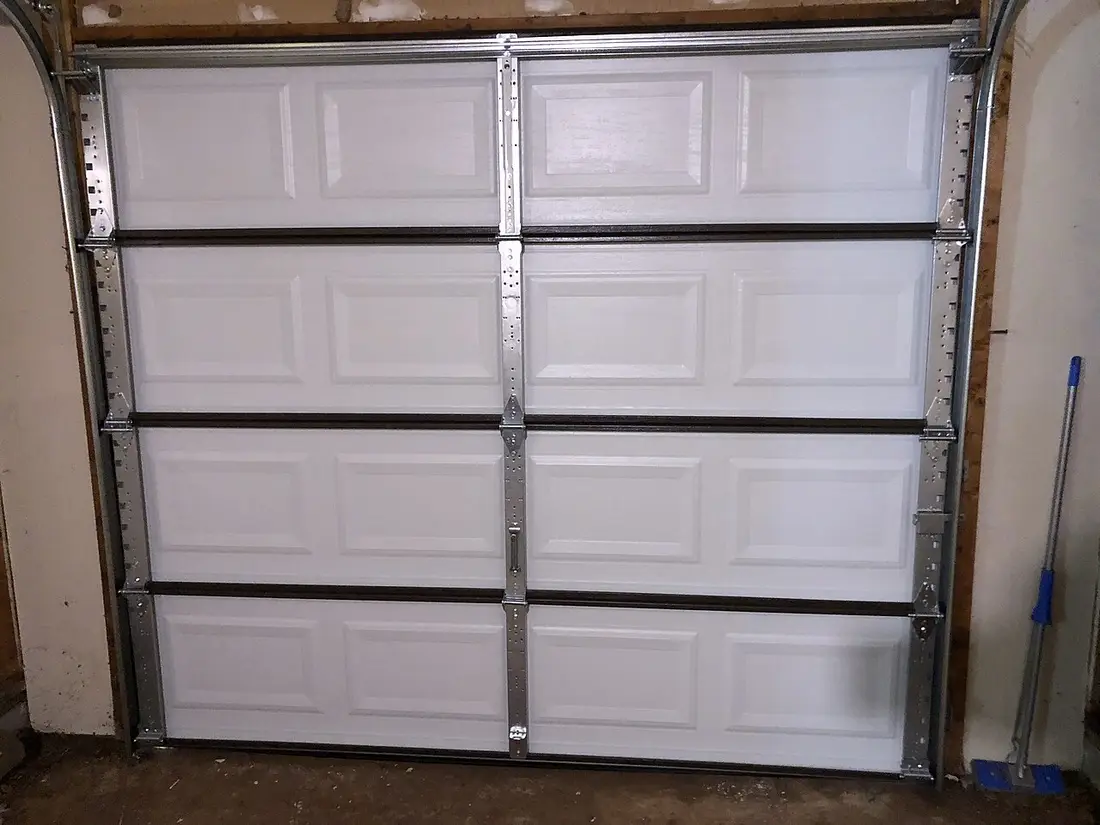
A rated door is not a strong panel in a weak frame. The assembly includes the door sections and their reinforcement, the tracks and their gauge, the brackets and their fasteners into real structure, and - on many doors - horizontal bracing. Replace any element with a lesser one, or fit the tracks into rotted jambs, and the assembly's rating is a memory. This is why installation quality and opening condition are storm questions, not cosmetic ones.
Wind pressure is half the storm; wind-borne debris is the other half. In the highest-exposure zones, impact-rated doors - or protected openings - enter the conversation, because a pressure-rated door struck through by debris has still opened the envelope. Whether your address calls for impact protection is a code and exposure question the specification conversation answers street by street.
Three checks, all eyes-only: look for a rating label on the door's inside face or edge - maker, model and design pressures are printed there on rated doors. Look at the tracks and brackets for rust thinning, especially at bolt holes. Look at the jambs the tracks bolt into, for soft or split wood at their feet. A door with no label, tired brackets or tired jambs is a pre-season conversation, held in spring - not a discovery made in the cone of a storm.
When a storm has passed, the garage door's work is not done - it is inspected. Run it fully and watch: new hitches, a track shifted by pressure, a seal torn, water standing where the surge reached. Storm water that entered the garage should be treated as a corrosion starting gun for every cable foot and bracket in the room - rinse, dry, and have the door read at the next service with the storm on its record. Doors that held deserve the same respect as doors that failed: a check, not an assumption.
On the Texas coast a garage door is a storm component: it is the largest opening in the house's envelope, and its failure in a hurricane pressurizes the whole structure. Doors here are specified to wind-load standards by exposure - the island and the bayfront sit in a different band than sheltered inland streets - and the rating is only real when the door, tracks, bracing and fitting are done as the rated assembly. The paperwork that proves it matters to insurers, and it is kept.
That is the service side of this guide's subject. When you are ready, the Garage Door Installation page carries the process, the coverage by neighborhood and the number to call.
Inside face or edge of the door - maker, model, design pressures. Photograph it for your records.
Rust at bolt holes and flex in the track are the assembly's weak links announcing themselves.
The tracks are only as strong as the wood they bolt into - soft feet mean the rating is theoretical.
Spring, not storm week: ratings, paperwork and fitting all take time the cone does not give.
Keep the rating paperwork with the house documents - insurers ask after storms.
Renew rusted brackets and tired jambs as they are found, not at replacement time.
Never substitute a lesser section into a rated door during a panel repair.
Keep the bottom seal sound - driven rain is the storm's quieter entry.
Windstorm coverage on the Texas coast runs through paperwork: policies and windstorm certificates care about rated assemblies and their documentation. Keep the door's rating label photographed, its installation paperwork filed, and any post-storm repair records with the house documents. When a claim ever turns on the door, the household with paperwork argues from evidence; the household without it argues from memory, in the worst month of its year.
Doors, ratings and fitting capacity all tighten as a storm approaches - the whole coast has the same idea in the same weeks. The households that fare best treat spring as the door's season: the rating read, the brackets checked, the conversation held while there is time to act on it. A door's storm readiness is decided in April's calm, and merely revealed in September's wind.
Headers, jambs and the floor's level write half of an installation's quality before the door arrives. A header that has flexed, jambs eaten at their feet, a slab edge crumbled by years of standing water - the new door inherits whatever the opening is. Installation here reads the opening first and scopes its repairs honestly, because a rated door in a tired opening is a rating on paper only. A finished installation is a door balanced to a finger's lift, sealed against driven rain, traveling quietly, with both safety stops demonstrated - not described - and the rating and warranty paperwork in the homeowner's hand. The old door and hardware are gone, the opener is programmed to the new door's weight, and the maintenance rhythm the coast demands is explained in one honest paragraph.
Reading the door's weight as its strength - rating is assembly and paperwork, not heft
Letting rusted brackets and tired jambs carry a rated door into the season
Substituting a lesser section into a rated door during a panel repair
Starting the rating conversation when the storm is already in the Gulf
Photograph your door's rating label and keep it with the house documents today, whatever it says - or does not say. That one photograph starts the most useful storm conversation a coastal household can have, in the calm months when it can still change something.
The fault sets the floor: a sensor alignment and a spring pair live in different worlds.
Read the GuideA bang and a level-but-dead door usually mean a spring.
Read the GuideIt proves it survived Harvey's load at your address, once - while younger, with brackets and jambs in better condition. Survival is evidence, not certification, and the assembly has aged since.
Bracing kits exist for some doors and raise real resistance, but a retrofit is not the same as a tested rated assembly, and it does not produce rating paperwork. The honest options are laid out at the specification visit.
The requirement follows the wind band and exposure, not the view - inland Corpus Christi addresses sit in high bands too. Your address's band is a knowable fact, and the conversation starts with it.
One call connects you with a garage door professional serving Corpus Christi and the Coastal Bend - springs, cables, openers, off-track doors and full replacement.
📞 Call Now